A front door of their own
Trace the journey from the sidewalk to the unit with groceries in hand. Mark the gate, lights, doorstep and a dry spot for packages.

Start at the gate. Could someone come home late, wheel in a bike and sit outside without crossing your patio? Then put that same care into the numbers.
Build a rental budget ↓
Ask the designer to draw an ordinary weekday on the site plan. How people get in, get deliveries and do the washing can matter as much as bedroom count.
Trace the journey from the sidewalk to the unit with groceries in hand. Mark the gate, lights, doorstep and a dry spot for packages.
Stand at the proposed living-room window and look both ways. Use the garden, the placement of doors and the direction of views to give each household a private corner.
Identify filter access, equipment shutoffs and durable finishes. Decide who will handle outdoor care, utilities and repairs before you set an operating budget.
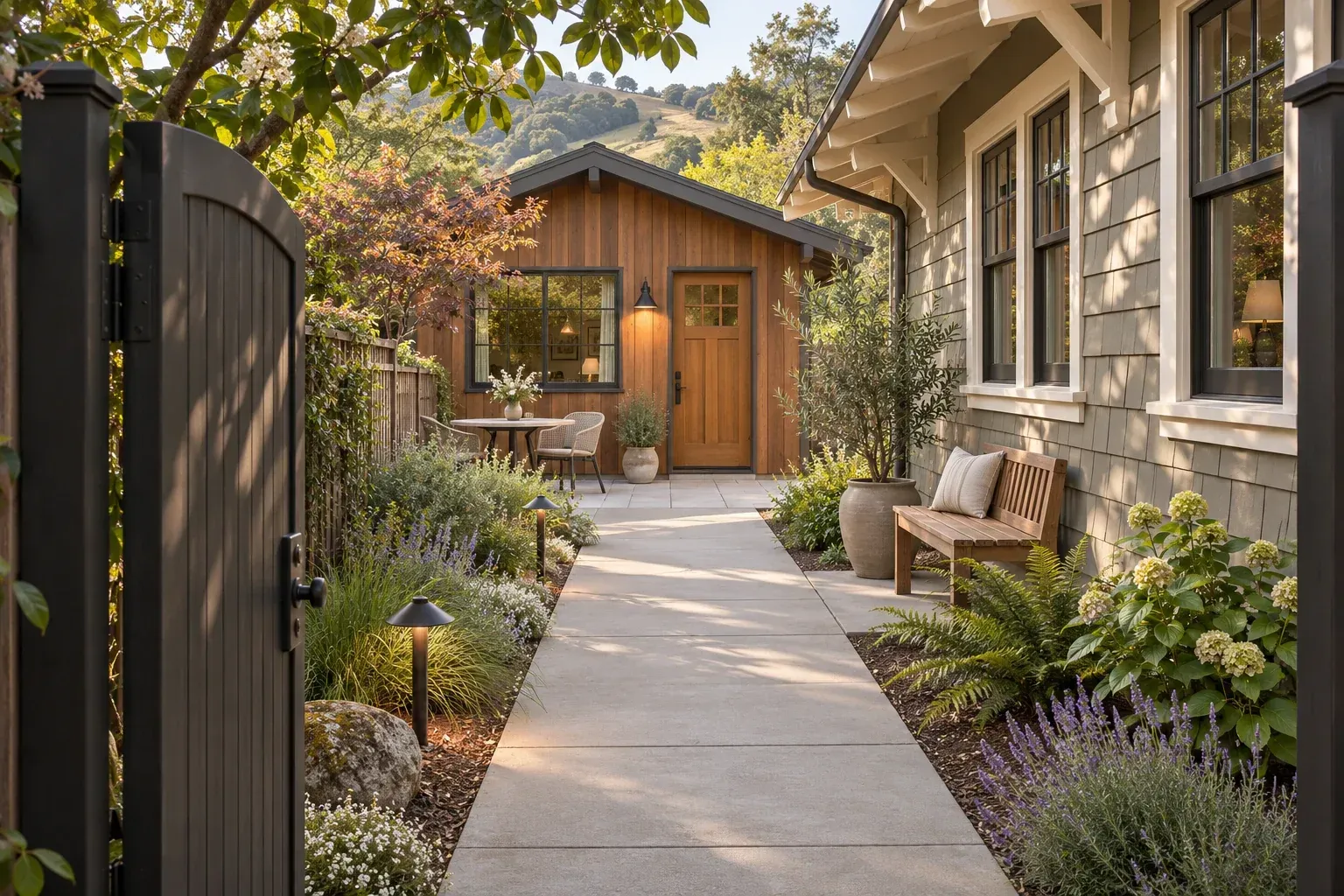
Follow a delivery from the gate to the front door. Give the resident a place to receive a parcel without crossing the owner’s private patio.
Illustrative architectural conceptChoose a monthly rent from your own research. Then see what remains after empty months, recurring expenses, a repair reserve and loan payments.
Collect nearby examples with a similar layout, access, condition and included utilities. Record the listing date and distinguish an asking price from a signed lease.
Request an insurance estimate, utility information and a property-specific tax estimate. Record each cost as annual or monthly before entering it.
Confirm the reviewing city or unincorporated county. Ask its housing or planning office about applicable rental restrictions and any steps required before occupancy.

Record the cabinet finish and hardware model. Being able to replace one handle or damaged front can change a future repair allowance.
Illustrative architectural conceptPick a consistent arrangement. If the listed rent includes utilities, include the costs you expect to pay under annual operating expenses. Ask comparable landlords which bills their rent includes.
Use the project budget and financing guides to assemble capital costs. Enter the resulting monthly debt payment here if you borrow. Keep cash invested up front in your separate project budget.
Enter the months available for rent. For a month reserved entirely for family use, count it among the months with no collected rent. Consider whether that changes utilities or other household expenses.
Gather several nearby listings or recent leases with a similar layout, entrance, outdoor space and utility arrangement. Record the date, the price and any differences you would want to discuss with a local rental professional.
Count time when rent will not be collected. Two weeks between tenants is roughly half a month. The worksheet accepts fractional months and keeps your annual expenses in place during that time.
Count the annual costs you expect to pay as owner, such as utility bills, insurance changes, management and routine maintenance. Convert monthly amounts to annual figures first. Enter project loan payments in their separate monthly field.
Put expected routine work, such as regular servicing, in operating expenses. Use the repair reserve for money you intend to set aside for future replacements. Check that the same item appears in just one line.
It divides annual expenses, reserves and loan payments by the number of occupied months. It tells you the collected monthly rent needed to cover those cash outflows under your assumptions. It does not establish what a tenant would pay.
The entered rent leaves a cash shortfall after the costs you included. The size of the shortfall tells you how much other cash the project would need that year. Recheck your cost and vacancy assumptions before changing the rent.
Walk the proposed route after dark as well as in daylight. Mark where headlights, windows, deliveries and waste bins cross private areas. Bring those observations into the design discussion while the entrance can still move.
Confirm the parcel’s reviewing city or county office, then ask its housing or planning staff about rental restrictions and occupancy steps for the intended use. The local rules directory is linked above.